19 Myths Baha’is Love!

Myth #1: The Bab and Baha’u’llah was anti-slavery

Truth: Both owned, bought, and sold black slaves. Baha’u’llah forbade the slave trade in the Aqdas, not slavery itself. One of the first laws that the Confederate States of America inacted was to make the slave TRADE illegal. But slavery itself continued. Baha’is in the Ottomon Empire and Egypt continued to own black slaves until these areas fell under British rule.

Read more of this post

An Open Letter to the Bahai Faith by Dennis mcEoin

Cambridge
England
7 January 1979

Dear Friends,

I have read your latest (November 1978) Newsletter with more than usual interest and sympathy, and feel that I would like to add a few words in its wake.

I shall not try to expand on Tony’s account of our seminar here in Cambridge, much as it is tempting to do so – from the report in your Newsletter, he seems to have done a thorough job of leading you through a very complicated set of issues raised there. The full report, as stated, is available, and dwells more thoroughly on the major topics mentioned by Tony.

I was most interested by the discussion reported on pages 3-4 of your summary. As Tony knows, this is a topic about which I personally feel very strongly. In the simplest terms, I fear that the Baha’i faith as it stands today is in very real danger of becoming irrelevant to the problems faced by people in the world outside – if it has not already become so. As the faith has become more and more organised, with, as you so rightly point out, a growing obsession with figures, numbers, and statistics for their own sake, and a tendency to evaluate the significance of the faith as a religion in terms which have no bearing whatever on this (such as how many languages literature has been ‘translated’ into), we seem to have become more and more introspective and withdrawn, exclusive rather than all-embracing. As a result, most Baha’is appear to be completely ignorant of the issues facing modern man. And, what is worse, they don’t care – if you suggest that hey read, say, Marouse [Ed. unclear word], most Baha’is react with a disdainful, slightly superior shrug: ‘we have the writings, we don’t need to waste our time on the book of false physicians’. As one friend, for some time an NSA secretary (not in the U.K.) put it to me: ‘nothing worth reading has ever been written in the twentieth century’. In fact, it is not even a case of whether people are up on Patti Smith or Malcolm Bradbury’s latest novel, they have yet to read Marx or early Koestler! Instead, the community is locked into an obsession with issues which were vital before or just after the first World War and, what is worse, are a lot less forthright now about issues such as war, poverty, race, and so forth that they were then. To speak about race integration in the States in the 20’s was genuinely progressive. Last year at a Youth Conference in the U.K. (facing a major race problem and the threat of growing fascism – the country’s fascist party is the fourth largest in the country), an NSA member told the youth that we should have nothing to do with the issue of race, since it is political!

Read more of this post

Ask any Bahai these two questions…

The Baha’i Faith is indeed a strange religion. The more I study it, the more I am amazed at its level of duplicity and intent to deceive people. Let me explain this.

You know there are those kinds of people who like to please everyone. And they will say anything – right or wrong to ensure that people like them or that they don’t lose their appeal. Sure, for some time we like them. But then their “sweetness” starts getting to you. Over a period of time, this “sweetness” starts getting sickening. You then want them to come clean in discussions, when it comes to giving their opinions and speak the right thing. You want them to speak the facts and not what people want to hear. Ever met people like that?

Read more of this post

Why do False Prophets praise the West so much?

It is no surprise that the false prophets have been lavish in their praises of the governments of the West. Perhaps this is because they have got support from there only. This is despite the fact that from a culture point of view, from a Shariat (law) point of view, the West is completely against the teachings of these false prophets.

An example of this is the prayer of Abdul Baha (the son of Bahaullah, the founder of the Bahai Faith) when he went to America in 1912. The American culture promotes alcohol and pork (which the Bahai Faith forbids). It is also one of the biggest advocates of homosexuality (which the Bahai Faith is silent about). Nevertheless, America is a supporter of global democracy, albeit selectively (very like the Bahais who like to protest only against Iran and no other country – Read more).

Read more of this post

Infallibility(?) of the Bahai Universal House of Justice

The appointment of the Universal House of Justice has always been the bane of the Bahai Faith – simply because there was no provision for the UHJ to take over the Guardianship of the Bahai Faith. Guardianship was always meant to be vested in the lineage of Shoghi Effendi. But Allah obviously decreed otherwise. Shoghi died without leaving any successor thus throwing the entire Bahai world into a tizzy. So much for the infallibility of Abdul Baha and Shoghi!

The spin doctors at the helm of the affairs of the Bahai world have obviously done their job well for they have reasonably succeeded in throwing dust into the eyes of their “faithful” followers. I say reasonably succeeded because after Shoghi, the entire Bahai community has been split, at last count, into 17 sects each one of which discredits the other! I have said this earlier and I say it again – Why try so hard to unite the world? Baha’is should first and unite their own. But more on that later.

Read more of this post

Who is the Head of the Bahai Faith?

Found this article on the Internet – thought it would be interesting for my readers…

The Universal House of Justice, in Haifa, Israel, claims to be the Head of the Baha’i Faith. The PDF files attached here (“Selections, 1988 letter to UHJ”, and, “1994 detailed response to UHJ”) challenge that claim, or, rather, question the rationality of that claim.

UHJ 1194 Detailed Response | UHJ Selections From 1988

Bahai Clergy (or Mullahs) UHJ - Infallible members of Bahai Faith

Bahai Clergy (or Mullahs) UHJ – Infallible members of Bahai Faith

The PDF files are taken from letters I wrote to the UHJ in 1988 and 1994. I was once a Baha’i (decades ago), though I am no longer. My purpose in sharing the letters is to caution seekers investigating the Baha’i Faith. Nevertheless, I expect that the arguments contained in the PDF files may also be of use to those Baha’is who have either broken with, or distanced themselves from, the UHJ, and I wish to make my letters available to them as well. My primary purpose, however, is simply this: to speak the truth to the best of my ability, for I believe that truth matters. I may be wrong, of course, and what I think to be true may not be true at all. But perhaps that is where the UHJ and I truly part ways, for the UHJ believes that, in its collective decisions, it cannot be wrong; that it is infallible in its pronouncements. Such claims, I believe, call for very close scrutiny indeed.

Read more of this post

Why the Bahai Faith is a Cult…

Much as the Bahais would like to disagree, the fact remains that the Bahai Faith is a cult. But don’t take anyone’s word for it. Based on “Combatting Cult Mind Control” by Steven Hassan (cult expert), here are the criteria for determining “cults”.
1. How new members are found

Dangerous Cults: With many cults, you don’t get to know what you are getting into until after you have made a commitment

Baha’i Faith: There are secrets but these secrets are not known to the poor, innocent, newly converted Baha’is. Does the common baha’i know that the Baha’i Elections are fully controlled by the “All Male, Supreme, All Infallibale, Haifan Organization”? Do they know that these are not spiritual but highly fraud and controlled? there are many secrets and are available on the internet. Search on google for “Pakistan Baha’i Election Fraud“, “Baha’i Control on their Electoral System“, “Baha’i Election fraud in India”.
Read more of this post

Bahais Are Not Just Political….

… They Are Hypocritical As Well.

The Baha’i faith is one of the most political movements around. After all, principles such as the ending of absolute national sovereignty, world government, universal currency, universal language, world tribunal, anti-communism, retention of constitutional monarchism, the abolition of non-Baha’i religious legal systems the retention of a class system, the abolition of tariffs, international police force, and so on are among the hottest political agendas.

Baha’i Faith is now no more concerned about Writings of Baha’u’llah, the laws of Aqdas and so on. What it is now concerned about is issues like the Trademark Registration, the incorporation of so called ‘Spiritual Assemblies’, the formation of External Affairs Departments with the objectives of establishing cordial relationship with political leaders and media etc.

Read more of this post

Why Do Bahais Deny the UHJ Being Clergy?

The Bahais have a weird habit of denying truth and reality. One of the many Baha’i denials is that they insist that there is no clergy in the Bahai Faith. They seem to forget that the UHJ, the institution within the Bahai Faith that has the power to legislate laws, excommunicate etc runs exactly like a clergy being it is a clergy.

 Bahais like to insist that the clergy are a bunch of paid people who are given duties that are ritualistic and that the UHJ is not doing rituals. But the simple fact remains that Bahais do regard the UHJ as infallible, thus making them a special class of people with the Faith. Furthermore, the UHJ, as mentioned before, is given the power to legislate and excommunicate people.

Bahai Clergy (or Mullahs) UHJ - Infallible members of Bahai Faith

Bahai Clergy (or Mullahs) UHJ – Infallible members of Bahai Faith

Read more of this post

Former Hands of the Cause Reveals All!

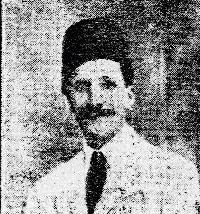
Abdul Husain Aayati lived amongst the Bahais for 20 years and served them through these years. He was popularly known as “Awareh” which means the one who wandered about in love (of Bahaullah). After these years, he saw the corruptions of the Bahais first hand, renounced the Bahai Faith and finally reverted back to Islam. Thereafter he wrote the book “Kashful Heel” to reveal the true face and hypocrisy of the Bahais. The life history of Awareh is full of interesting events and episodes and all of these cannot be outlined in this brief treatise. However, in order to appreciate his book – Kashful heel – it is first important to understand his personality. Here is a brief about Awareh.

Who was Abdul Husain Aayati?

Abdul Husain Ayati

Abdul Husain Ayati

He was a littérateur, historian, writer, translator, journalist and a great poet. His father was Allamah Haaj Shaikh Mohammad, famous as “Haaj Aakhwant Tafti”. He was the grandchild of Sheikh Mohammad who was famous as “Aaqa Bururg” Tafti Yazdi. He came from an illustrious family of scholars from Yazd. Abdul Husain Aayati was born in 8th Zilhaj 1287 AH in Taft. At the young age of 15 years, he came to Yazd and attended the school of Khan Buzurg. He completed his study of Arabic grammar and language, logic and bayan from Meer Bahauddin Jandaqi Mulla Abdul Karim Misgar and Mulla Akber Nadushi. In the year 1313, after his father‘s death, he rose to the position of his father on the insistence of the people of Yazd. He was considered as a religious authority and as a man of knowledge (“Ahle Minbar wa mahrab”). He was the Imam (leader) of two masjids (mosques) and used to handle the affair of the people.

HIs initial contact with Bahais and the Bahai Faith
In the year 1320, at the age of 33 he was introduced to a Bahai book. The books made such an impression upon him that he was eager to meet them. He came in contact with members of the Bahai Faith and even stayed in those areas which were largely occupied by Bahais. He met with some prominent Bahai speakers. They appointed some Bahais to have regular contact publicly with Abdul Husain Aayati so that they could lower his esteem in the eyes of the people, while others alleged that he had inclined towards the Bahai Faith. Due to these accusations, people distanced themselves from him due to which he left his birthplace. Considering this move as an opportunity, Bahais tried to attract him and were successful in that for after some time he declared the Bahais Faith. However as time passed, he realized that Bahais were not correct and then reverted to Islam.

Read the entire article about Abdul Husayn Ayati