Earlier Baha’is were involved in Opium Trade

The export crops passed through Shiraz on their way to the Gulf. Iranian long-distance merchants from Fars developed marketing networks for these commodities, establishing trading houses in Bombay, Calcutta, Port Said, Istanbul and even Hong Kong. The encounter with European colonial institutions, and with local reformist and independence movements, made these Iranian expatriates more cosmopolitan than the majority of their compatriots.

Within Iran, those merchants who proved successful in the opium trade grew fabulously wealthy and politically influential, as did the government officials, such a Qavam al-Mulk, who sponsored it and taxed it. As we shall see below, one of the important Iranian export houses (with an outpost in Hong Kong) was operated by the Afnan clan, Baha’is and relatives of the Bab.[1]

Family of The Bab

Family of The Bab

Read more of this post

Aqdas bankrolled with profit from opium trade?

Much of Husayn Ali’s (Baha’u’llah’s) economic enterprises (such as publications of works in Cairo and Bombay, etc) in the 1870s-90s was bankrolled by a successful mercantile elite, the Afnans, who had their fingers in numerous pies of the late 19th century international trade in the East from Hong Kong to Beirut, particularly in opium, whom the Afnans held a monopoly on at one point inside Iran.

Read more of this post

Bahais Are Not Just Political….

… They Are Hypocritical As Well.

The Baha’i faith is one of the most political movements around. After all, principles such as the ending of absolute national sovereignty, world government, universal currency, universal language, world tribunal, anti-communism, retention of constitutional monarchism, the abolition of non-Baha’i religious legal systems the retention of a class system, the abolition of tariffs, international police force, and so on are among the hottest political agendas.

Baha’i Faith is now no more concerned about Writings of Baha’u’llah, the laws of Aqdas and so on. What it is now concerned about is issues like the Trademark Registration, the incorporation of so called ‘Spiritual Assemblies’, the formation of External Affairs Departments with the objectives of establishing cordial relationship with political leaders and media etc.

Read more of this post

Baha’i Conversion Activities in Nashik

The Baha’is always deny that we are not involved in the conversion of Indians but we are just trying to serve the society by conducting moral classes for the Children and Junior Youth. Here is a report from a Baha’i Auxiliary Board Member published in a Baha’i Newsletter {Reflections on Growth––Number 28, December 2011} The report says the Baha’i propagandists have gone to the villages had a meeting and got their declaration, that states that they have accepted the Baha’i Faith and believe in Baha’u’llah as the manifestation of God of this age and Abdul Baha as his successor. The acceptance of the Baha’i Faith implies that they have abandoned Hinduism. These villagers are taught that “you have gained promotion in Hinduism not left it”. How long the Baha’is and their Administration will keep on cheating the simple minded Indians.

An Auxiliary Board member reports on how the friends in an advanced cluster area assisting a neighboring cluster in efforts to initiate a program of growth and pass the first milestone.

“It was decided in our reflection meeting in Nashik that a team would visit the Surgana cluster to assist the two dedicated young men who had pioneered there about three months ago. We formed a team of five – three men and two women – and headed to Surgana so that we could help with home visits that evening.

Converting Hindus in India just outside a Hindu Temple

Read more of this post

Bahais caught ‘cheating’ again in Panchgani

For centuries Indians have been forcefully converted into other religions. Religious conversion has profoundly affected our cultural legacy by the after-effects of genocidal coercive religious conversion. It has left its wounding imprint on our individual psyches and our collective consciousness.

Although coercive religious conversion of Hindus in India and abroad has deep historical roots, recent deceptive religious conversion techniques used by Baha’i Religion pose serious political, social, ethical and psychological problems.

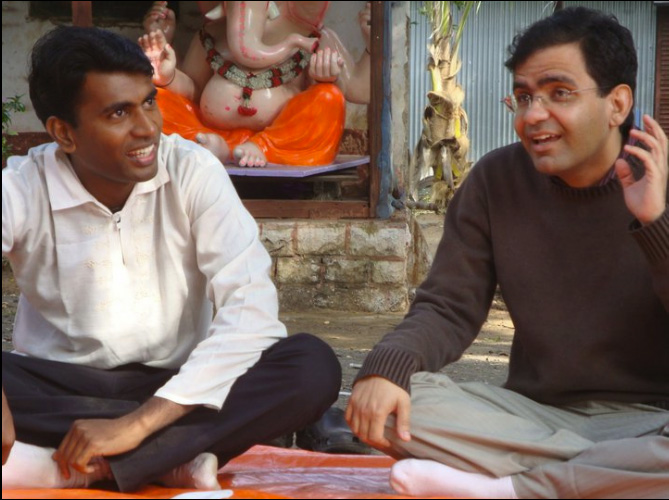
Converting Hindus in the Temple of Lord Ganesha

Converting Hindus in the Temple of Lord Ganesha

Read more of this post

Why Do Bahais Deny the UHJ Being Clergy?

The Bahais have a weird habit of denying truth and reality. One of the many Baha’i denials is that they insist that there is no clergy in the Bahai Faith. They seem to forget that the UHJ, the institution within the Bahai Faith that has the power to legislate laws, excommunicate etc runs exactly like a clergy being it is a clergy.

 Bahais like to insist that the clergy are a bunch of paid people who are given duties that are ritualistic and that the UHJ is not doing rituals. But the simple fact remains that Bahais do regard the UHJ as infallible, thus making them a special class of people with the Faith. Furthermore, the UHJ, as mentioned before, is given the power to legislate and excommunicate people.

Bahai Clergy (or Mullahs) UHJ - Infallible members of Bahai Faith

Bahai Clergy (or Mullahs) UHJ – Infallible members of Bahai Faith

Read more of this post

Former Hands of the Cause Reveals All!

Abdul Husain Aayati lived amongst the Bahais for 20 years and served them through these years. He was popularly known as “Awareh” which means the one who wandered about in love (of Bahaullah). After these years, he saw the corruptions of the Bahais first hand, renounced the Bahai Faith and finally reverted back to Islam. Thereafter he wrote the book “Kashful Heel” to reveal the true face and hypocrisy of the Bahais. The life history of Awareh is full of interesting events and episodes and all of these cannot be outlined in this brief treatise. However, in order to appreciate his book – Kashful heel – it is first important to understand his personality. Here is a brief about Awareh.

Who was Abdul Husain Aayati?
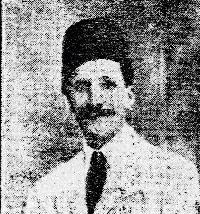
Abdul Husain Ayati

Abdul Husain Ayati

He was a littérateur, historian, writer, translator, journalist and a great poet. His father was Allamah Haaj Shaikh Mohammad, famous as “Haaj Aakhwant Tafti”. He was the grandchild of Sheikh Mohammad who was famous as “Aaqa Bururg” Tafti Yazdi. He came from an illustrious family of scholars from Yazd. Abdul Husain Aayati was born in 8th Zilhaj 1287 AH in Taft. At the young age of 15 years, he came to Yazd and attended the school of Khan Buzurg. He completed his study of Arabic grammar and language, logic and bayan from Meer Bahauddin Jandaqi Mulla Abdul Karim Misgar and Mulla Akber Nadushi. In the year 1313, after his father‘s death, he rose to the position of his father on the insistence of the people of Yazd. He was considered as a religious authority and as a man of knowledge (“Ahle Minbar wa mahrab”). He was the Imam (leader) of two masjids (mosques) and used to handle the affair of the people.

HIs initial contact with Bahais and the Bahai Faith
In the year 1320, at the age of 33 he was introduced to a Bahai book. The books made such an impression upon him that he was eager to meet them. He came in contact with members of the Bahai Faith and even stayed in those areas which were largely occupied by Bahais. He met with some prominent Bahai speakers. They appointed some Bahais to have regular contact publicly with Abdul Husain Aayati so that they could lower his esteem in the eyes of the people, while others alleged that he had inclined towards the Bahai Faith. Due to these accusations, people distanced themselves from him due to which he left his birthplace. Considering this move as an opportunity, Bahais tried to attract him and were successful in that for after some time he declared the Bahais Faith. However as time passed, he realized that Bahais were not correct and then reverted to Islam.

Read the entire article about Abdul Husayn Ayati
Hypocrisy of Haifan Baha’i Faith exposed once again!

Mrs. Gloria Javed a high ranking Baha’i and a member of ‘Continental Board of Counsellors’ of Baha’is of Asia, who reports directly to the Universal House of Justice in Israel in an interview about the teaching of Baha’i Faith in India openly admits that Baha’is are involved in full scale conversion of Indians in a deceptive manner. She said that we have now become more straight-foreward in converting Indian people to Baha’i religion, because the Universal House of Justice has asked us to do that.

Read more of this post

Stupidity of nineteen days months in Bahai Faith

19 days month in Bahai Faith is totally unscientific and absurd.

And then to make a year of 365 days they have made a stupid adjustment of 4 days- also called as inter-calary days. Why this adjustment is done?

If at all Bahai faith is a religion of God, then why they have deviated from 12 months calendar when all other divine religions have 12 months year. The debate is open for discussion. The only apparent reason for converting the number of month to 19 is due to the signifance of number 19 in Bahai faith( as the number of early converts were 19).

Ayyam-i-Ha or Ayyam-i-Dal ??!!-Stupidity of 19 days months
The Baha’i calendar has 19 months of 19 days each, totalling 361 days in a year + the inter-calary days (Ayyam-i-Ha). Only a leap year has 366 days.

Obviously Husayn ‘Ali Nuri (Baha) could not count properly because any solar inter-calary calculation would make those days Ayyam-i-Dal (i.e. the days to the calulation of the letter dal, ‘d’, letter dal = 4) not Ha (letter ha = 5). Ayyam-i-Ha would technically only occur for the leap years not the normal years. So much for the ‘supreme manifestation of the day’ who could not even count properly!

Thus the so-called Ayyam-i-Ha of Baha’i faith comes only once in 5 years. Rest 4 years have Ayyam-i-Dal. OK !

Bahai hypocrisy over Exiling of Palestinian people

The Exiling of the Palestinian People

“When the Zionists decided to found an independent Jewish state on Palestinian territory, one of the first problems they faced was the small size of the Jewish population living there. In the early 1900s, Jews constituted less than 10 percent of the population of Palestine.Thanks to the efforts of the Zionists, the number of Jewish migrants, 100,000 in the 1920s, reached 232,000 in the 1930s according to official figures. By 1939 there were 445,000 Jews out of a total population of 1.5 million. From representing 10 percent of the population just two decades before, they now constituted 30 percent by 1939. Jewish settlement areas were also expanded in line with the rise in population. By 1939 the land owned by Jews had doubled in comparison to the 1920s. By 1947, there were 630,000 Jews in Palestine and 1.3 million Palestinians. Between the partitioning of Palestine by the United Nations on November 29, 1947 and the founding of the state of Israel on May 15, 1948, the Israelis acquired a substantial part of Palestinian lands. As a result of pressure and killing in Palestinian villages, the number of Palestinians living in some 500 cities, towns and villages fell from 950,000 to 138,000. A great number of these people had been killed, and others were exiled. The Zionist terror groups that would later form the Israeli Army attacked Muslim villages at night. Muslims were shot, and everywhere these groups passed through was burned and destroyed. By these means, some 400 Palestinian villages were wiped off the map in 1948 and 1949. The property left behind by the Palestinians was taken over by the Jews by virtue of the Absentee Property Law. Until 1947, Jewish land ownership in Palestine was some 6%. By the time the state was formally established, it had sequestered 90% of the land.9 The Palestinian Arabs were left with just two separate areas, the Gaza Strip and the West Bank.
http://www.harunyahya.com/spring04.php

Read more of this post