Abdu’l-Baha: Indigenous Americans are wild savage animals who lack reason…
July 31, 2014 Leave a comment
The most preached and most celebrated teaching of Baha’u’llah is the Oneness of Humanity. In this article we will show using quotes from Abdu’l-Baha how the Oneness of Humanity applies to the Indians of America.
The original Farsi speeches of Abdu’l-Baha which were uttered in America were published by the Iranian National Institute for Baha’i Publications in the Second volume of the book Khatabat (speeches) in the year 127 Badi`. The book can be found on the official Baha’i library at:
http://reference.bahai.org/fa/t/ab/
and can be downloaded using the following links:
http://reference.bahai.org/download/ka2-fa-pdf.zip
http://reference.bahai.org/download/ka2-fa-doc.zip
On pages 112-113 Abdu’l-Baha is cited as uttering the following statements:
Abdu’l-Baha and native Americans
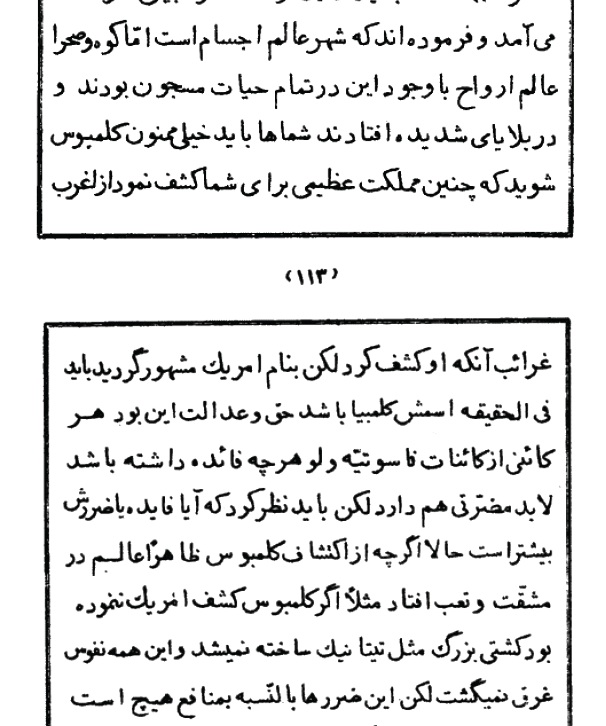
“You must be very thankful to Columbus for discovering such a great country for you. It is the most strange thing that he discovered it but it became known as America. In reality, it must be called Columbus and this would be right and just.”

 The Bahai Insider